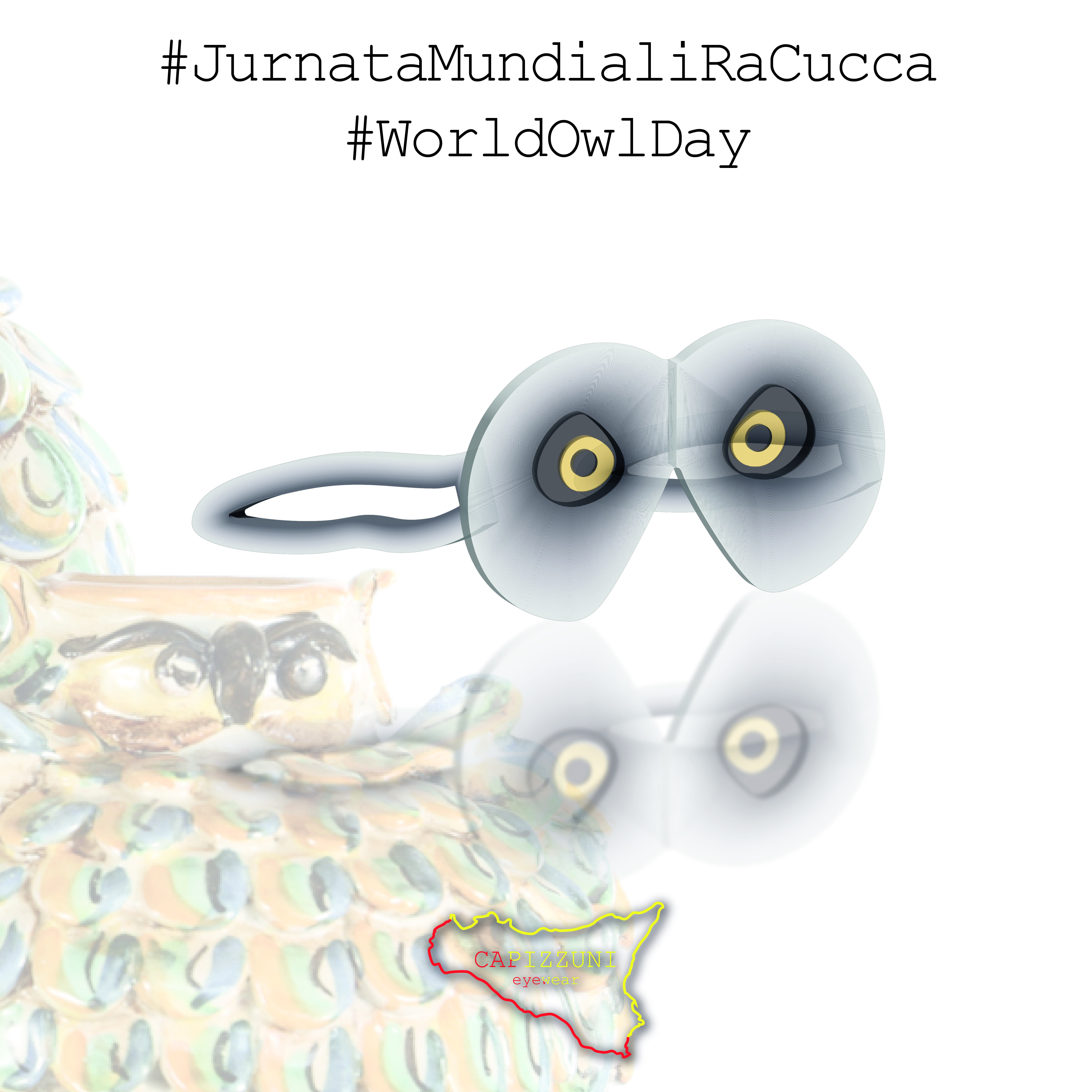
Today for the World Owl Day we talk about care and a proverb from the post-World War II period: “Cu si vanta ca so’ vucca o è asino o è cucca.” Cucca is a local term used to refer to the owl, although there are different schools of thought about this term, because other scholars think that our ancestors with the term Cucca meant the little owl or the female cuckoo. A peculiarity of all birds is that they emit sounds that (in addition to normal chirping) are real chants; this phenomenon occurs especially in spring, and they do it to attract the attention of the opposite sex. In this regard, referring to the cucca, we could say that this expression is addressed to those who love to talk about themselves and their qualities in public, or rather, who use their pronounced and proverbial ability to talk nonsense to win the attention of girls. Comparing these characters to two animals like the donkey or the cucca is a way to belittle, demean, and knock down the pedestal they have built for themselves and climbed up on their own… So let's remember that... it's better to talk little and do a lot, also because you know what they say cu si vanta ca sò vucca o è asino o è cucca. Focusing on the characteristics of the animal... But let's not stop there: did you know that the cucca is also a typical Sicilian food, more precisely from Modica? In Modica tradition, they were prepared when making bread at home, setting aside a piece of bread dough. To fill the cucche, fresh sausage is generally used, but cured sausage is also excellent, and cheese, preferably semi-aged Ragusano cheese so it melts when cut, but you can choose any mild cheese; instead of sausage, you can use cubes of any cold cut like sausage, ham, bacon, etc... or the famous Capuliatu. To give an extra touch, you can use pieces of black olives, but since it's a rustic dish, you can get creative in any way.
The Short-eared Owl or Asio Flammeus, or as we know it in Sicily the "cucca", is an enchanting specimen, with a large ivory-colored "face", on which stand out yellowish eyes, surrounded by dark fringes, and a short hooked beak. The body is streaked with brown and yellow, with long wings and a short tail; the ear tufts are very small, so much so that its English name is "Short-eared Owl".
The breeding area of this species is in Northern Europe and its presence in Italy is limited to the freshwater areas of the Upper Adriatic, Puglia, and the Mediterranean. It is usually silent, but sometimes emits a loud kioo, while its song (during the mating season) is a repeated and deep bu-bu-bu. It prefers open marshy areas and nests on the ground among riparian vegetation.
At dusk it flies over the waters of Lake Guardia (Randazzo), in the far northwest of the Etna Natural Park, to select its prey among the weaker specimens of the rich aquatic birdlife.
With just a few ingredients, these tasty pastries are made, always present at any time of year in Sicilian rotisseries.INGREDIENTS
Sicilian cucche are rustic pastries commonly known in Sicily and especially in the Ragusa area with the dialect name “cucche” from “ancucchiare” meaning to put together…to unite, which are nothing more than a strip of stuffed dough rolled up to form a swirl or rose. Usually, Cucche were made with leftover homemade bread, the same used to prepare , when making the” Ragusano for the family's weekly needs. A sort of “recycling” recipe. With just a few ingredients, these tasty pastries are made, always present at any time of year in Sicilian rotisseries.
*References
https://www.etnalife.it/gufo-di-palude/